[Home] [Previous Page]
Ereignis - page 3
Spoiling the Party?
Heidegger’s Lectures on Trakl at Spa Bühlerhöhe
Tobias Keiling and Ian Alexander Moore
[I]t is difficult, at first blush, to understand how, of all
people, Trakl—the drug-addled, Austrian expressionist in love with decay and obsessed with his
sister—could become for Heidegger the next “poet of the Germans” and take on the role of
savior of the German people and indeed of the entire Occident.
Elliot R. Wolfson
Temporally, the notion of the last god is an instantiation of Heidegger’s
open circle, the return to the beginning that never was, the genuine
iteration of the again that is altogether otherwise.
Krzysztof Ziarek
As event, the Ereignis does not offer itself in any positive manner, but precisely as its own ex- or dispropriation. It events by dis- or deventuating: Ereignis gives only as Enteignis; or there is Ereignis only as Enteignis.
Vrasidas Karalis
Aletheia meant responsivity between the seer and the seen, a
relation of mutual interpenetration: the knowing subject changes its forms
of understanding as the known object is resignified.
Theodore Kisiel
[C]an this temporal field of a GA perhaps also be understood in the equiprimordial
register of truth as unconcealment, such that the
“institutional errancy” of family, publishers,
editors and translators that in fact has manifested itself in the erratic path of the GA
can itself be justified in Heideggerian terms, as what Heidegger himself in fact anticipated?
I think for Heidegger and the question of technology, it's not so much that technology is
either a good or a bad thing, it's just the way that metaphysics has distorted the essence of
technology or occluded it, so that we don't quite get to its essence.
Nothing stands in the way of the final possibility that for Dasein the only issue left becomes ordering for the sake of order itself.
Deborah Lutz
Face-to-face with its own being, Dasein’s uncanny feeling is not just a
sense of being “not-at-home,” it is also a sense of this strangeness being
itself at the heart of one’s own existence.
Reiner Schürmann
Of the two versions of the ontological difference, metaphysical and phenomenological, only the latter allows for an adequate understanding of the referential character of symbols (in symbols a first, apparent meaning refers to a second, hidden meaning which is explored through practice).
Heidegger's insight disclosed to him that the Dasein in human being is nothing human.
Martin Heidegger
Translated by Ian Alexander Moore and Gregory Fried
Philosophy is the getting-going of the going out, over, and beyond the whole of beings that lies at the basis of Dasein.
The clearing is an opening lighting center beyond beings that encircles all that is
akin to the barely known nothing.
John Hacker-Wright
Grasping the truth of the situation, I see how what I am doing here and now is what is to be
done as an action worth doing for itself, and that insight is constitutive of its product, πρᾶξις.
Peg Birmingham
Gregory Fried
Laurence Hemming
Julia Ireland
Elliot R. Wolfson
Richard Polt
Are we,
today, in touch with time as history? Are we capable of asking who we
are, not just what we are? Are we open to the arrival of what is our
own? Or do we continue to be absorbed in representing, producing, and
reproducing what is present?
The significance Heidegger finds in his words, and
Emerson and Thoreau find in theirs, is remarkable enough; but
that in the face of this significance, to discover that their thoughts
are intimately, endlessly related, has become for me unforgettably
interesting.
As Plotinus, Heidegger, and Lacan have said, you have
to give what you don’t have. If you give what you have, you’re not giving.
Heidegger's Christian heritage includes the theme of the Fortunate Fall—”Yet all our honey in that poyson grewe”—and he uses its analog the Fortunate Breakdown to think in accordance with philosophy's inveterate norm of imparting good news, or inventing it.
Heidegger’s Bots
The Birth and Death of Responsible Artificial Intelligence
Chris Tessone
No one ‘lives in the moment’ according to Heidegger’s reckoning. Intelligent beings stretch out in time, caught between birth and death: we live between.
Iain Macdonald
[I]n Adorno’s view, Heidegger is more concerned with primordial possibility than with the real possibility of emancipation, which is suppressed by existing conditions.
Christos Hadjioannou
Heideggerian authenticity and mindfulness would involve a rehabilitation of the Stoic idea of oikeiōsis, as is revealed for example by the homology between oikeiōsis and Befindlichkeit, where both non-conceptually disclose the organism’s constitution to itself.
Rodrigo Therezo
[T]his neutrality
is never in fact neutral, acting as a disguise that erases sexual difference and
femininity in favor of a surreptitious phallogocentrism Derrida finds Heidegger
guilty of [...]
Martin Heidegger
Force, Violence and the Administration of Thinking [PDF]
Adam Knowles
Heidegger was highly attentive to his own reputation and was a
master at self-representation, yet we should not allow ourselves to be distracted by
Heidegger’s own sleight of hand.
Jill Drouillard
We, as sexed bodies, are responsible for the throwness (that forms the past) of Dasein.
Antonio Cimino
Heidegger appropriates
Aristotle’s texts on ethics, politics, rhetoric, and psychology for the purposes
of his analysis of factical life, so that neither ethics nor politics as such define
his interpretive angle, which remains quintessentially ontological.
[O]nce one recognizes the technological understanding of being for what it is—a historical understanding—one gains a free relation to it.
We can also think of the respective determinations of deliverance as two poles of a continuously varying ontological reaction norm (contour of the individual capacity for taking-as, for ex-sistence, eigenen Seinkönnen): one the extreme of safety-seeking (stability, predictability, order, equilibrium, harmony, shelter) and the other of risk-seeking (self-creation, Solon's flowers of folly, Schiller's Spieltrieb, Schürmann's ‘singular,' the later Heidegger's an-archie)
New book
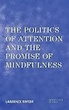
The Politics of Attention and the Promise of Mindfulness
Lawrence Berger
[Heidegger] offers an extraordinary vision of the place of the human being in the cosmos, which calls for the practice of acute and steadfast attentiveness, thus providing a standpoint that transcends traditional political oppositions.
MORE
Gavin Rae
[A]lthough Heidegger identifies an originary ontological indeterminateness and points out that this manifests itself ontically through an immanent process of auto-expression, he insists that ontic analyzes of sexuality must be specific to each concrete Dasein and thought in relation to the open-ended becoming that each Dasein is.
Cristian Ciocan
[U]nlike Heidegger — who, as we have seen, places all human movements in
the category of the concept of gesture — Flusser reserves this term only for a specific
kind of movement.
[I]f the world is intelligible upon the basis of this “public one,” it is correct to say that Dasein is not neutral, but rather marked for gender in a patriarchal order.
Tim Miechels
Galileo’s most important insight, according to Heidegger, is that he saw that in order to experimentally examine nature, you first need to have a conception of nature that underlies all your experiments.
[T]he treatment succeeds because the truth it seeks is the truth of revelation (ἀλήθεια) which is self-validating to the extent that the e-vidence for evidence is e-vidence. As a liberating from darkness (λήθη), this truth is essentially freedom, and freedom of this kind comes to pass through the functioning of language.
Robert B. Pippin
This void must be filled. But for Heidegger, attempting to fill it at all,
especially by some human self-assertion is itself an expression of nihilism.
Steven Crowell
It is not that we don’t recognize differences between human beings, machines, and “lifeless nature” or whatever; rather, it is that we act in such a way that those differences finally do not matter.
Anna Kouppanou
Malabou transforms
Heidegger’s hierarchical binaries of the history of being and metaphysics,
ἀλήθεια and ὀρθότης, concealing and revealing,
into a ‘general economy of […] mutability’ that, she believes,
governs through and through Heidegger’s thinking and is itself based on an ‘ontological metabolism’
that produces ‘changes, mutations, and transformations’.
Heidegger’s own point was that what is in question – this is for him
the «danger» – is nothing other than our increasing inability to raise any
question at all, let alone critical questions regarding technology.
Heidegger’s lectures on Schelling coincide with his efforts to think being as the
self-concealing yet revealing event between humans and God, in which the contest
between a recalcitrant earth and a malleable world is waged.
It is a kind of overlapping between Marx's late texts and those of Heidegger's with regard to their respective assessments of the modern epoch: the epoch of the bourgeois-capitalist form of society on the one hand, and the technical age on the other
Ian Alexander Moore
Proudhon, Bakunin, Saurin—they are all pseudo-anarchists or anarchists only in name. For, according to Schürmann, they fail to exit the metaphysical field
Andrew Feenberg
Marcuse diverges from Heidegger in arguing that the congruence of science,
technology and society is ultimately rooted in the social requirements of
capitalism and the world it projects.
The Net of Indra is not embedded in pre-existent, absolute space; rather, spatial relation is an effect within the Net of Indra.
Reiner Schürmann
No common trait or strategy leads from the rule of subsumption to the freedom of the event. This is why, to understand being as Ereignis, a leap is required.
Francesco Guercio and Ian Alexander Moore
Humberto González Núñez
[T]here are
good reasons for drawing a strong connection between Aristotle’s ἐνέργεια and ἐντελέχεια and Heidegger’s
later guiding-word for being, namely, Ereignis.
James M. Magrini
[T]o write it down in the service of a systematized or scripted curriculum, with the requisite set “lesson-plans,” already betrays Heidegger’s point about one of the things that makes Socrates the purest thinker of the West, namely, “he wrote nothing,” and if he would have attempted to do so, he would have turned away from authentic thought.
Converging Dialogues
Geschlecht I
sexual difference, ontological difference
Jacques Derrida
What if sexual difference were already marked in the opening up of the question of the sense of Being and of the ontological difference?
Rodrigo Therezo
Geschlecht III is,
then, arguably Derrida’s most frontal and incisive Auseinandersetzung with
Heidegger, a German word often translated as “encounter,” but that Derrida
hears in the more polemical sense of confrontation
Ian Alexander Moore
In Broken Hegemonies, [Schürmann] goes further, arguing that anarchy, another name for finitude,
has a double principle, natality and mortality, which leaves us in a double bind insofar as natality and
mortality are always undoing each other: mortality is the undertow that undoes every new beginning.
Perhaps the best way of describing angst, which captures what Heidegger needs from it methodologically, is as an ‘epiphany’ (in the Christian sense) or ‘apocalypse’ (in the Greek sense).
Anonymous Presence
Towards a Phenomenological Account of Heidegger’s Ereignis
Daniel Neumann
What unfolds as Ereignis is presence
itself, i.e. our standing in, and simultaneously reflecting on, the open.
Heidegger says that Angst ‘does not know' what it's anxious about.
Peter Hanly
[M]usic will belong to thought precisely in such a way as to preclude its becoming an object of that thought.
Sacha Golob
The problem as [Heidegger] sees it is not that we have a decent philosophy of language but have missed something else.
Michel Haar
Does not the heideggerian analysis amount to saying that the fall into
everydayness is useful, pragmatically necessary, but "immoral"?
Being is something that happens to us rather than something we do, even autonomically. This, along with the dynamic connotation, is why he comes to use the term Ereignis: being manifesting itself is an event in which we are caught up rather than an act we perform.
The Work of Art and Truth of Being as "Historical"
Reading Being and Time, "The Origin of the Work of Art," and the "Turn" (Kehre) in Heidegger’s Philosophy of the 1930s
[T]he appropriation of historical Being in the Ereignis does not denote the forceful, willful taking possession of Being, in the sense of usurping something.
Rather, in the Ereignis, it is Being that takes possession of us.
Wanda Torres Gregory
Technological language is thus the language of inauthenticity.
It is the modern technological Gerede.
Cyber-talk is idle talk.
Richard Polt
[L]anguage adjusts to the needs of our experience of what is.
Hans Ulrich Gumbrecht
[T]here can be no doubt whatsoever that Heidegger held these notebooks to be intellectually significant—something which, considering their thoroughgoing banality, is for me not merely surprising but actually horrifying.
Once he saw that Husserl’s breakthrough regarding the categorial intuition had already been anticipated by Aristotle in Metaphysics IX, 10, Heidegger had a new insight, one that launched him on his lifelong pursuit of “the thing itself.” He saw that movement determines meaning.
With a response from Richard Polt.
Derrida thinks of Heidegger's notion of appropriation—Ereignis but also authenticity, Eigentlichkeit—a virtuous pretense residually connected to the Judeo-Christian, or Abrahamic, faith.
Da-Sein’s Body
Between Heidegger on Being and Anders on Having
Anders’ questioning project of the meaning of having with respect to both Being and the body is not only phenomenologico-ontological but aesthetico-epistemological: concerned with appearance, quite specifically with feigning of fictions, illusion.
The Path’s Forking
Toward a dialetheic account of Heidegger’s Truth
Andrej Jovićević
[I]t is not that Theaetetus’ answer should be assimilated to empiricism and rejected on such grounds,
but rather that this answer assimilates unhiddenness to presence (what-is-present, phantasia)
to the point where the two terms become identical.
Withy's intervention keeps Tomlinson's book off phenomenology's Index of Wrong-headed Research so that we may avail ourselves of whatever light his effort sheds on die Sache selbst. For the goal of Tomlinson's work is the same as that of Heidegger's, die Herkunft von Anwesen.
The Psychedelic Dasein
Modeling the Effects of Psilocybin with Heidegger’s Phenomenology
Eamon Robert Stuart MacDougall
[Heidegger] claims that there is a call of the conscience from a place of
uncanniness; a place that is alien to us in our everyday mode of being immersed in the
they-self.
Heidegger’s phenomenology is, in no small part, in the business of identifying phenomena that conceal themselves and revealing the fact of that self-concealing.
[T]he priority of beings over beyng, which was already on the way to logical self-assertion in the thinking of the thinkers of the first inception, unleashes the metaphysical destiny of the West and its concurring planetary devastation in the wake of Machenschaft.
[updated]
What does Heidegger mean by Ereignis?
Google Bard
Ereignis is a German word that has no direct English translation. It is often translated as "event" or "appropriation," but these translations do not capture the full meaning of the term. Ereignis is a central concept in the philosophy of Martin Heidegger, and it refers to the event of being.
For Heidegger, being is not a thing or a substance. It is not something that can be known or understood through reason. Being is the ground of all things, and it is that which makes things possible. Ereignis is the event in which being comes into presence. It is the moment when something is revealed as what it is.
Ereignis is not something that happens to us. It is something that we participate in. When we encounter something, we are participating in Ereignis. We are allowing being to come into presence through us. Ereignis is the event of truth. It is the moment when we see things as they really are.
Ereignis is a difficult concept to understand, but it is central to Heidegger's philosophy. It is the event that makes all things possible, and it is the event that allows us to see the truth.
Here are some additional thoughts on Ereignis:
Ereignis is a dynamic event, not a static state. It is always happening, and it is always changing.
Ereignis is not something that we can control. It is something that we can only participate in.
Ereignis is a gift. It is something that is given to us, not something that we earn.
Ereignis is a mystery. We cannot fully understand it, but we can experience it.
Ereignis is a complex and profound concept. It is a concept that has the potential to transform our understanding of the world.
Needs citations.
Martin Heidegger
Translated by
Andrew Haas
Kaiser-Wihlem Institute. Bibliotheca Hertziana, Rome, April 8, 1936.
What is asked about is that from which beings arise, and that to
which they return - the ground and abyss of Beyng.
Rethinking the Possible
On the Radicalization of Possibility in Heidegger’s Being and Time
William McNeill
The ontological determination of Dasein—that is, of the being that we ourselves in each case are—is primarily possibility.
Ana Ilievska
Carlo Michelstaedter from Gorizia, an Italophone
Austro-Hungarian citizen of Jewish origins,
finished writing his tesi di laurea on October
16th 1910, put a gun to his head the next day, and
took his own life.
Hakhamanesh Zangeneh
A side-effect of this longstanding, broad reception is that the field of Heidegger studies is so differentiated, dispersed, and fragmented that it becomes impossible to adjudicate conflicting claims on a purely conceptual level.
Michael Marder
Consistent with the methodological recommendations of phenomenology,
Pessoa describes the ontic relationality of Dasein in its non-thematizable
everydayness.
Ian Alexander Moore
Heidegger marks this sort of translation
with a shift in emphasis. Rather than übersetzen, he writes übersetzen, stressing the first
syllable and hence the “over” into which we are to be “placed.”
The insight into the burden of being may also help us see the limitations of the Enlightenment without leaping to the conclusion that it must be completely rejected.
Irene McMullin
From Time and the Shared World: Heidegger on Social Relations.
Thus Heidegger’s characterization of intentionality avoids both
the overly conceptual Searlean reading—in which acting intentionally
must involve an explicit awareness of the goal or the satisfaction conditions
that it establishes—and Dreyfus’s overly self- less understanding of
intentionality, which lacks any sense of agency’s mineness.
If, having somehow finessed the measurement problem, we could model a large random sample
of ontological insights by a suitable function, the bulk of the distribution would be – so goes the
conjecture – populated by noticings, teen angst, ‘existential angst,’ and midlife crises, whereas
breakdowns would be found only in the long tail of rarity.
Prabhsharanbir Singh
Heidegger failed
to develop this insight and realize that this distress caused by the lack of holy names
must take root in the body before it can move towards its fulfilment. The event
whereby this distress takes roots in the body is like that of Ereignis, whereby Being
enters history.
Heidegger's vocabulary and grammar of being
Heidegger's polysemic reading of the principle of reason solves the problem of contra-diction by saying all three levels of being at once, expressing their Sameness the Same way.
A genuine history of thought, then (or a “history
of Being”) would neither celebrate the progress of enlightenment nor bemoan the growing
darkness, but would trace the interplay of the clear and the obscure.
Boston University, May 11-14, 2023
Philippe Nonet
Das Ereignis, as
the law, is then nothing other than the joining of the unity of the belonging
together of φύσις, which grants beings (das Seiende) to rise out of darkness
into light, and ἀλήθεια, namely unconcealment as the clearing in which
man stands as guardian of the radiance of being (das Sein).
Christos Hadjioannou
In his analysis of geometry and continuum, an analysis that came after his
analysis of comportment, Heidegger tacitly says that Aristotle did not fully
develop an existential analytic.
Become the Becoming
A Heideggerian lesson learnt from the embers and the stars
Weian Ding
Goodness is not eternal and unchanging, but it is a for-the-sake-of-which (Worumwillen). Human beings in the flux of becoming will constantly rendezvous with Being and clear (lichtung) their way up to such Being.
Krzysztof Ziarek
Difference constitutes only one momentum of the Ereignis, against which the event turns the nihilating backdraft of the de-parting beyng.
John Hacker-Wright
The πάθη, when they are in the ἕξις of ἀρετή, bring us into contact with the truth about
ourselves in our being-there. In that connection, we attain φρόνησις
Katherine Withy
Angst is the direct revelation of the ontological, which disrupts our falling being-amidst-entities.
Alfred Denker
Martin Heidegger is probably the last of the great letter writers in the history of philosophy. He wrote an estimated 10,000 letters in his life.
The example of Heidegger's Seinsgeschichte shows that the structure of the comic mythos is conserved even under radical refashioning; even after purported destruktion the structure still stands.
What does Heidegger mean by Ereignis?
Bing Chat (Beta)
Ereignis is a German word that translates to "event" or "appropriation", but Heidegger uses it to refer to his thought of how being occurs in its truth². Heidegger works out this thought between 1936 and 1938 in his second major work, Contributions to Philosophy (Of the Event)². Ereignis names the very core of how Heidegger attempts to think the truth of being in its historicality³. It involves a relationship between humans and the world, in which each being is revealed as having its own essence⁵.
(1) Ereignis: the event of appropriation (Chapter 10).
(2) Daniela Vallega-Neu - Ereignis.
(3) Martin Heidegger in English - Ereignis.
(4) Daniela Vallega-Neu - Ereignis.
(5) Contributions to Philosophy (Of the Event) | Reviews | Notre Dame.
(6) Heidegger Gesamtausgabe | Ereignis.
Bing confused the citation numerals. It's still in beta.
Obituary
(September 4, 1935 — February 16, 2023)
Parvis Emad was a world-renowned scholar in continental philosophy and phenomenology, specifically as an educator, interpreter and translator of Martin Heidegger’s writing.
Future or future past
Temporality between praxis and poiesis in Heidegger's 'Being and Time'
Felix Ó Murchadha
Birth marks my dependence on others, on, in the full meaning of the word, generation.
Unity in Crisis
Protometaphysical and Postmetaphysical Decisions
[PDF]
Jussi Backman
In the most developed version of his approach, Heidegger addressed
the contextualizing interaction between the foreground of presence and the
background of non-presence as an event, as “taking-place” (Ereignis).
Guelfo Carbone
Meaningfulness is not
something one is able to create herself or himself.
Francesco Guercio and Ian Alexander Moore
Peremption, as paradigmatically shown in Heidegger’s
Beiträge, is a post-epochal time
in which this differend unfolds as the apocalyptic κένωσις of the historiographic/historical/evental
differend between ἀρχαί and anarchy, which is always an-archically at play in the abyssality of the
Da.
W. J. Korab-Karpowicz
Thinking is apprehending beings as a whole in their being.
David Farrell Krell
Now one of the four senses ascribed to "being" in Brentano's dissertation on Aristotle is ὃν ὡς ἀληθές "being in the sense of the true."
Martin Heidegger
This focus on plurivocity (πολλαχῶς λεγόμενον: what is said in many ways) is not an empty poking about among isolated word meanings, but rather is the expression of the radical tendency to make the meant objectivity itself accessible and to make available the motive source of its different ways of meaning.
Babette Babich
[Heidegger] suggests that by relaxing our sense of the control
that we have we may yet be able to let go enough that the
technical mastery we seek will not overpower us and will
not make us its slave.
Hiding in Plain Sight
Κίνησις at the Core of Heidegger’s Work (Prolegomenon)
Whatever twists and turns his philosophical trajectory took, and regardless of the so-called “turn” (Kehre) that he allegedly carried out in the 1930s, Heidegger never took his eye off Dasein as the central topic of his thinking, including when he focused on Ereignis in the last four decades of his career.
James McGuirk
[T]ruth
and untruth are re-thought because the ‘thrownness’ (Geworfenheit) of Dasein
is re-thought in terms of the clearing (Lichtung) of Being to which historical
man is given over.
Daniela Vallega-Neu
Original PDF.
The event of appropriation is nothing “behind” being and time but rather names their appropriation, the event of their coming into their own and in relation to each other.
Robert Bernasconi
If recognition of the destruction of the history of ontology
leads one to pause in the face of the claim that “Heidegger
is the author of Being and Time,” it is a doubt which quickly
spreads to other philosophical texts.
Andrew J. Mitchell
Original PDF version.
Heidegger thus sees in Dionysus a blending of opposites as well, a coexistence of
contradiction, even that between presence and absence. For this reason, he is the god of
neither presence nor absence, Dionysus is the god of the trace, of that which lies
“between” presence and absence.
The point to note is that Heideggerian love purports to be distinct from limerence. For the distinctive feature of amour-passion is ‘volo ut sis—the lover of me.' ‘I want to be loved by you' as the song goes.
Acylene Maria Cabral Ferreira
[T]he articulation of the disclosedness to
being of Dasein and Dasein-with in the attunement of freedom enables the
meeting, the comportment, of the disclosedness of the understanding and freedom
of being for the other in the attunement of love.
20 most viewed papers on beyng.com in 2022
We must simply experience this owning in which man and being are
owned to each other, that is, we must take the turn into what we call
Ereignis.
Euro Beauro of Literaturo
Elliot R. Wolfson
Insofar as “the historicality of
the domain of man is grounded in the enowning-character of be-ing
(Ereignis-Charakter des Seyns),” a person can be historical or unhistorical, but if one is
entirely “without history,” then the human becomes an animal.
Andreas Elpidorou, Lauren Freeman
“affectivity.” The benefit of this translation is that it captures the notion that
existing in the world, we are always already affected by and feel things, as well as the sense in which
in Befindlichkeit things matter to us.
10 most viewed English Heidegger pages on beyng.com in 2022*
| Text |
Page |
| Country Path Conversations |
11 |
| Parmenides |
120 |
| Basic Writings "Building Dwelling Thinking" |
352 |
| Plato's Sophist |
323 |
| Being and Time |
262 |
|
Early Greek Thinking "Moira (Parmenides VIII, 34-41)"
|
79 |
| Heraclitus |
115 |
| The Question Concerning Technology |
28 |
| Bremen Lectures "Positionality" |
23 |
| Hölderlin's Hymns "Germania" and "The Rhine" |
50 |
* excluding pages in previous years' top ten.
Lawrence J. Hatab
Yet Heidegger’s subsequent writings, in my opinion,
show that the early phenomenology really was simply preliminary to a larger philosophical aim:
getting to some fundamental essence that can ground thinking and that might be taken as something
unto itself (being as such or Ereignis, understood as independent of beings).
10 most viewed German Heidegger pages on beyng.com in 2022*
| Text |
Page |
| Holzwege (GA 5) Wozu Dichter? |
269 |
| Grundprobleme der Phänomenologie. 1919 (GA 58) |
261 |
| Sein und Zeit (Niemeyer) |
2 |
| Beiträge zur Philosophie (Vom Ereignis) (GA 65) |
331 |
| Kant und das Problem der Metaphysik (GA 3) |
13 |
| Wegmarken (GA 9) Vom Wesen des Grundes |
174 |
| Vorträge und Aufsätze (GA 7) Was heißt Denken? |
129 |
| Die Geschichte des Seyns (GA 69) |
95 |
| Grundfragen der Philosophie. Ausgewählte »Probleme« der »Logik« (GA 45) |
193 |
| Frühe Schriften (GA 1) Vorwort zur ersten Ausgabe der „Frühen Schriften" |
55 |
* excluding pages in previous years' top ten.
Heidegger
interpreted human beings, insofar as they already know the beingness-dimension of entities, as
transcendence, i.e., as being already beyond entities and disclosive of the possibilities in terms of
which entities can be understood. This kinetic exceeding of entities he called the human being's
Immer-schon-vorweg-sein, his condition of being "always already ahead" of entities.
A discussion with
Peter Gordon
Despite its dark context, Being and Time remains essential reading for engaging with the vexing challenges presented by modernity.
Jan Slaby
The perspective on temporality that is
coded into the deep structure of affective comportment helps to relate even putatively fleeting
affective states to more encompassing situational and worldly conditions, and moreover in a
dynamical fashion that always points ahead of the concrete “now” into essentially open yet
always already pre-fashioned dimensions of possibility.
Alexander Stern
The threat is not mainly that AI may take over certain activities from human beings, but that we already regard these activities as functions akin to the supply of power.
Martin Heidegger
Translated by
Bruce V. Foltz and Michael Heim
The language machine is — and above all, is still becoming — one manner in which modern technology controls the mode and the world of language as such.
Eric S. Nelson
Sexuality and gender, as elements of essentializing anthropology in Heidegger’s critique, close off more than they can unlock possibilities of tangible existence.
Original PDF version.
It is not that the typewriter, on its own, has clouded the world; this signless cloud, if properly read, points to an “event” of oblivion that has affected the relations among being, human beings, and beings as a whole.
Antoine Pageau-St-Hilaire
Krüger argues that Plato's dialogues conceive of truth as a dynamic process of self-revealing
which is by no means reducible to the propositional understanding of truth
Daniel O. Dahlstrom
The future that provides the sense of my being-here is not something on
hand, it is not the presence of any object, and yet only with a view to it am I able to make sense of existing.
Jussi M. Backman
In Heidegger’s reading, the dialogue culminates in the notion of the “ instant”
(to exaiphnēs, Augenblick) in which the temporal plurality of
presence and un-presence converges into a unified disclosure.
Babette Babich
Heidegger’s claim is always a crucially, critically local claim, a claim of place, of the
world-historical playing together of time and space (Zeit-Spiel-Raumes).
Peter Hanly
Original PDF version.
It is here, then, that we can see at work something like a natality:
this thinking of being is a thinking of natality to the extent that it is
a thinking of incipience, of a dynamic of emergence and withdrawal.
Willem L. Graff
Only on the ground of Possibility and
Nothingness, only against the background of death, can reality in
the usual sense be known.
that-which
In its “thinging”, the thing refers to what is elsewhere. It is in this referring to what lies beyond itself, in an elsewhere, that the thing becomes itself and announces its existence.
Test yourself with the
ProProfs
7.
What does Heidegger refer to as the event of appropriation and what would be the result?
-
Understanding our natural place in the world which results in peace of mind and with the world.
-
Understanding time and presencing which results in understanding our place in the world.
-
Coming to accept ourselves and others as a Being which results in socially beneficial actions.
-
The event where one comes to self-actualizing which results in them becoming masters of the world.
Um, none of the above?
time is the field within which being is intelligible at all
In light of Withy's account self-concealing being can be taken in this very way—as a zero symbolic value in the ontology-system: opposed to — other than — all things in its lack of thinghood; and yet opposed to — rather than — the absence of all things, to nothing.
Kris McDaniel
When we say that ‘being is’, we use a sense of ‘being’ that ‘posits nothing in reality’
and hence our sentence is consistent with our flat-footed denial that Being
and its modes are genuine entities. And finally, we can see how
Heidegger could think that being depends on Dasein even though there are many entities
that do not depend on Dasein.
Sophocles’ Antigone is the only individual whom Heidegger names as authentic.
Gumberg Library
Jill Drouillard
Original PDF version.
Dasein, by focusing on the “how” of historical construction rather than the “what is” of static juxtapositions, offers
insights for thinking about nonbinary, trans, and genderqueer identities.
A discussion with
Truth happens because we participate in it, and this is not a one-time event but a path we travel over and over again.
Derek Hampson
The mis-taking of ψευδὴς δόξα is therefore a failure of the intended predicate, i.e. what is said about the object before us. This leads Plato to grasp the essence of ψεῦδος, un-truth, as the un-correctness of the proposition. Accordingly truth must also have its seat in the λόγος, rather than unhiddenness, it is thereby understood in terms of the correctness of the proposition.
Róisín Lally
Original PDF version.
Perduring in deep time and remembering the language of nature is an interpretative ongoing process that takes seriously other-than-human entities that occupy and share our world.
A dialogue with
With contributions from: Scott M. Campbell, Ian Alexander Moore, Richard Polt,
David Kleinberg-Levin, Yuval Adler, Erik Kuravsky, Kevin Aho, Jill Drouillard,
Jesús Adrián Escudero, Tricia Glazebrook, Róisín Lally, Iain Thomson,
Yuchen Liang, and James Emery.
Jialin Li, Bin Zhang
With the growing separation of thinking and poetry, computational thinking is rampant everywhere, and an era of technological dictatorship and poverty of thought and poetry has arrived.
Richard Wolin
[E]vidence suggests that Heidegger, under the influence of the Third Reich’s Arbeitsideologie, viewed “Arbeit” as an autonomous mode of ontological “unconcealment” (Unverborgenheit) whereby the “Being of beings” is revealed.
Matriculation Ceremony Speech November 25th, 1933
Two addresses delivered at summer courses for foreign students at the University of Freiburg, August 15-16, 1934
Martin Heidegger
Gert-Jan van der Heiden
Ereignis concerns a
gift of language in which the essence of language is disclosed to us.
Heidegger writes that Ereignis can be experienced as that which gives
or grants. What it gives and what it grants is that which is most
proper to us, namely the realm of the open to which we belong.
[O]nce he understood the breakthrough Husserl had
achieved with the categorial intuition, Heidegger applied that insight to a rereading of κίνησις in
Aristotle that started him on his lifelong pursuit of the question of being.
Whether Kraftsmaschine
is taken as ‘dynamo’ or as ‘power tool’ its
kinetic
essence is ‘rotor.’
Original PDF version.
Heidegger presents the currency of need and
desperation, that is: he lists a litany of death, as indeed of pain that is to say suffering,
and also of poverty, all and each as what confronts us and at the same time
manages not to touch us, leaving us unmoved, unchanged, in a terrifying sense.
An Interview with
Simon Truwant
School of Philosophy, Australian Catholic University, Melbourne
Andrew Benjamin, Richard M. Capobianco, Richard Colledge, Jeff Malpas, Claude Romano, Marilyn Stendera
With participation via Videolink
Original PDF version.
[F]undamental attunements let our relation to particular things and events retreat and reveal the sheer “that” of being and nonbeing and thus the possibility of being and nonbeing as such.
We cannot, in the strict sense of these terms, know and understand
the clearing, but we can and should acknowledge it, precisely because this field
of meaningfulness is not only the most basic fact of our existence but in fact is our existence.
[Next Page]
Created 1995/4/18
Last updated 2026/6/21
Pete