[Home] [Previous Page]
Ereignis - page 4
Gregory Fried
St. John's College (Annapolis) Lectures
The ‘hidden secret of our essence' is the ‘having-been' that is still within us and is us, fabricated as we are piece by piece from alien forms, and fabricating as we do piece by piece new forms.
Three planks tabulated.
Robert Bernasconi
Original PDF version.
Heidegger acknowledged that to think that evil dwells in the essence of being represented a challenge.
8 October 1934 – 2 August 2022
Ian Alexander Moore
Inasmuch as Dasein
through its transcendence implicitly projects or lets be the open
realm in which beings may be encountered, Dasein implicitly philosophizes.
Original PDF version.
What is at issue is not the difference between modern and classical science,
but that between Western thinking and its forgotten origin.
The space of possibilities of meaningful presence — die Lichtung — is one such bubble within the larger bubble that is life — the space of possibilities of organisms — within the rather larger bubble that is our particular universe, a bubble within eternal inflation.
Robert Brandom
The Monist, Vol. 66, No. 3, Categories (JULY, 1983), pp. 387-409
Not only is the
distinction between the ontological categories of the ready-to-hand and the
present-at-hand intelligible only in terms of the sort of Being that Dasein has,
but the difference between Dasein's sort of being and readiness-to- and
presentness-at-hand must itself be understood in terms of Dasein.
That being conceals itself, that world effaces itself, and that the clearing surreptitiously holds back other possibilities are all modes of concealing that obtain simultaneously with the unconcealing in question. They are all also modes of self-concealing in one way or another, whether what is concealed is the unconcealment, the unconcealing or the concealment itself.
Daniel O. Dahlstrom
Original PDF version.
[T]o think this beginning in a way that captures its originary, inceptive
dimension is to come to understand being in a way different from yet underlying the
Greek beginning and its understanding of being (Sein) as φύσις. It is, in other words, to
understand be-ing (Seyn) as the historical grounding of the meaning of being and its
difference from beings, i.e., as the ground that constitutes and thus appropriates to itself
the essential correlation of that meaning and human understanding of it.
New book
Heidegger on Being
Self-Concealing
There is much to be said about being’s shining
out and its various modes, as well as about disclosing and how it is
correlated with being as a dimension of third-plank
unconcealing
(i.e., das Ereignis). Indeed, there is much to be said about worlding,
which is a way of thinking third-plank
unconcealing that receives
comparatively little attention in Heidegger’s corpus. There is presumably
also more to be said about being’s self-concealing—not
only about the fact that being conceals itself but also about how we
experience and express that self-concealing.

MORE
All of which leaves us with the classic Heideggerian question: the Grundmerismus discloses a fundamental difference—in what dimension is that difference embedded? What subtends the distinction between ontotheology and finitude, that from which the two emerge in their difference?
Martin Heidegger
Heidegger’s last letter.
Conference
June 20-21, Lisbon and online
The conference will explore and discuss Martin Heidegger’s reading and reception of Friedrich Nietzsche’s ideas.
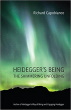
New book
Heidegger’s Being
The Shimmering Unfolding
The
“first inception” among the ancient Greeks glimpsed Being as
pure giving and granting, and the “other inception,” which
is breaking in upon human beings in the present time, retrieves
the first inception and brings into fresh language the giving,
letting, appropriating character of Beyng itself, namely, as
Ereignis.
MORE
Gregory Schufreider
Original PDF.
If art involves an ontological determination,
then this is to insist that a time-space
of unconcealment is not only opened up in
the conflict between world and Earth but
that what Heidegger designates as “the truth
of being” happens historically in ontical
creations that are stationed in the midst of
beings to set a standard for their appearance
as phenomena.
Dermot Moran
Where Heidegger speaks of the inquiry
into the meaning of being as the most basic and concrete of questions,
Hussed agrees, but he comments in the margin that this is a "transcendental-phenomenological
question" about the constitutive meaning of being.
As Heidegger puts it, the fact that something is not this or that is what constitutes that
thing’s being.
§ 7 of the paraphrastic translation in the Being and Time app updated.
David Storey
The point is that Heidegger approaches ontology in terms of movement rather than
things,that the main movement he is concerned with is that of life,
and that early on, life is conceived not merely as the temporal movement of human Dasein,
but in a wider sense to include both humans and other living things.
Obituary
6 Aug 1943 — 11 May 2022
Martin Heidegger
Translated by
Tobias Keiling and Ian Alexander Moore
Being-in-itself is dependent on the human being insofar as being always already shelters within itself the clearing of essencing that is safeguarded by the human essence, but in such a way that this human essence itself belongs to the essence of being, from which that being-in-itself comes forth.
and
Tobias Keiling and Ian Alexander Moore
New book
Heidegger and the Holy
Edited by Richard Capobianco
The religious and spiritual resonance of Heidegger’s language is
unmistakable. His language of “the holy” as “the source” and “the gladsome”
that pours forth “light” and abiding “joy” for humans and for all beings is
a religious and spiritual language—which certainly has metaphysical and
theological implications.

MORE
'House in general' is ontologically prior to houses; a history of houses might be attempted but 'house in general' has no history, it always already was, it pre-exists houses.
[O]ne repays a teacher badly if one remains a student
or a follower much less an acolyte, reflecting that
the teacher has, just in order to be a teacher, to
withdraw as such[.]
What shows up within the clearing and thus is understandable becomes actually understood
when it is taken as having such-and-such a meaning (Bedeutung),
whether that meaning is correct or not—the way, for example, an Athenian juror in
399 BCE might take Socrates to be a threat to the city-state.
Martin Heidegger
Translated by
Ian Alexander Moore
For the truth of our Dasein is no simple thing.
Martin Nitsche
In both texts space is understood as
opened: in Contributions as an empty between-space, and in Agchibasié as an opened landscape (Gegend).
Beyng as event serves as a ground for
many things, including Dasein and the worlds
in which we encounter other beings. But the
nature of this grounding can be rather unclear.
Ian Alexander Moore
I would like to take seriously the possibility that Heidegger was attempting to understand the Nothing on its own terms. This was, to be sure, a path Heidegger did not follow for long. But one of its forks leads to a destination that Heidegger would arrive at only in the mid-1930s, albeit by way of a different route.
Turner’s Überschreitung aims at understanding biological being as a structure of existence in
Heidegger’s sense; it seeks to establish and determine the structures of being-in-the-world in
non-human biota.
The work of art, and in fact
world in tension with earth, are seen as an event of aletheia, Heidegger’s
term for truth as unconcealment (Unverborgenheit) (GA5: 21).
The most complete document of this kind yet.
Ereignis is not an event at all, not even “the event of appropriation.”
Olga Alieva
Heidegger
asserts that lógos pseudēs, a distorting lógos, is possible “only if nonbeings
can be (237a2)” (GA 19, 410/284). So, the question of falsehood,
on his reading, concerns both the ontological status of ψεῦδος, i.e. the
being of non-beings, and the structure of lógos itself.
Christopher Naughton
The act of drinking the wine Heidegger describes as conditional, making the jug a thing
that is located in the place where it functions not as just another jug but a jug of that place.
Traditional hero that Wendy is, ἄτη is at hand to snare her into tragedy.
Joeri Schrijvers
[B]oth Schürmann
and Heidegger would agree that technology inaugurates the “annihilation”
and “extinction” of metaphysical principles and positions and opens onto the
anarchic origin of being as simple presencing—nothing more, nothing less.
John Sallis
This is the HTML version of a paper in Gatherings 2017. The original PDF file is on the Heidegger Circle web site.
[T]he singer can seem to echo Heidegger’s insight into the ancient goddess
of truth herself, Aletheia, tacked between the marvels of perspective, and we remember,
as Lacan tells us, as Nietzsche has told us, that truth rises naked from the depths, as the
ancients depict her, with a mirror in her hand.
Marcia Sá Cavalcante Schuback
To be in love is said here to be in the love, to be in Eros and
understood as the same as being urged to experience the most proper
meaning of existence.
With contributions from: Scott M. Campbell, Lee Braver, Morganna Lambeth, Richard Polt,
Harri Mäcklin, Jussi Backman, John J. Preston, David Liakos, Iain Thomson, Katherine Ward,
William Blattner, Megan Altman, Carolyn Culbertson, and Timothy Quinn
W. J. Korab-Karpowicz
Asking the question of Being
(and, drawing our attention to this question is his significant contribution)
is an important addition to, but can never replace, asking moral
questions in the spirit of rationality and freedom.
Thomas Brockelman
In Heidegger's path from transcendental philosophy through
"thinking," Žižek would argue that Heidegger should have stuck with transcendentalism.
Maybe Heidegger, relegating Nietzsche to the Roman, gains for himself the chance to
claim the Greek other beginning. If so, the Alemannic and the local betray some of his
ambitions, the fox, as Hannah Arendt spoke of him, pointing to physiognomic traits
evident in the younger man, still present as Heidegger aged.
By
standing outside her Being in the truth of Being, the human preserves the essence of her
Being.
Sofya Gevorkyan & Carlos A. Segovia
What, viewed from a Heideggerian and early-Greek
standpoint, [Gestell] suppresses, is, in the case of all non-human-made things, what we are willing to call
their “translucent phenomenality,” i.e. their translucent-ness to “being” – their auto-poietic shining
forth into the region of the unconcealed.
No Easy Answers
Original PDF.
We have always already “suffered” the burden of thrown-openness as the clearing. No prior agent has acted upon ex-sistence, forced facticity upon us, thrown us into being-needed for the sake of intelligibility at all.
Hans Ruin
[W]hat
is sought is an understanding of freedom not as a foundation for
being, in the sense of its ultimate explicability, but rather as the neutral event
through which Dasein is situated before and amongst beings.
Philip Tonner
[B]oth social and cultural revolutions have driven the larger ‘human revolution’, or the general process of hominization
along its trajectory towards ‘we moderns’. Such revolutions are necessary to fore-ground the Upper Palaeolithic record where local styles and time-space cultures are identifiable.
William McNeill
Thinking that is the not yet, that happens as the not yet of itself,
has always anticipated the present.
Entschlossenheit is not altogether for keeps: "Dasein is already in [Unentschlossenheit], and
soon, perhaps, will be in it again." Yet in the phrase Gaddis puts to various uses
semper aliquid haeret, a bit always sticks (flesh to soul, tell to fake, shit to heel);
authentic Entschlossenheit
"resolves to keep repeating itself;" a glimpse of 'radical opened-upness' sticks in the Sein.
Elad Lapidot
The fundamental concept of teshuva makes room for thought, delineating a horizon in which it ultimately would be possible to illuminate the very event of “thinking”, as it unfolds in Heidegger’s efforts.
David Kleinberg-Levin
Heidegger’s “originary ethics” must derive its directive, its normativity, its point of reference, hence its measure, from the questioning of being—from our thoughtful exposure to the ontological dimensionality into which that questioning throws us.
João A. Mac Dowell
Heidegger kept unaltered his differentiated assessment of the Christian experience and its philosophical-theological interpretation. Religion as such constitutes a fundamental possibility of human existence, in the form of myth, as opposed to philosophy.
Wherever we locate the power, the claim is that the play first
opens the Greek – and so Western – understanding of being (as uncanny, and so as φύσις)
and of the human being as open to being and able to stand authentically towards it.
Gaëtan Pégny
The Heideggerian “questioning” is already a way of responding, and the politico-magical efficacy of the invocation of being makes up for the “fundamentally” unsteady character of the intellectual construction: being is a nonhuman and anthropomorphic figure.
The 'outside' world is not for us what we see, just because it is out there. It's made from what we take care about, what's of interest to us. The things that are of no interest in us and are out there, are for us a residue, a waste product, compared to things that we have an interest in.
Here Schürmann undertakes the reflective question, underway to be sure towards the event, the inception of Ereignis: “What, then, is it that already holds us? Nothing other than the post-principial economy made possible by technology as the completion of metaphysics.”
Joanna Hodge
[W]hen Heidegger insists that the essence of Technik is not itself technisch, it may well be that the essence of techne is to be thought through an invocation of a movement of nihilism, in this double sense of a covering up of exactly that to which Heidegger is trying to draw attention.
So from (Wer & Was) – beings – we get (Sein & (Wer & Was)) – being and beings,
the ‘narrow’ ontological difference.
Thence (Lichtung & (Sein & (Wer & Was))) –
the ‘broad’ ontological difference between the clearing and
being-and-beings.
The philosophers must return to the
cave not only in order to save the polis, but also in order to understand the
political realm in its particularity after spending time in the light of the intelligible
forms.
William McNeill
The projection and configuring of possibility belongs, rather to Being itself as such, as a happening to which Dasein (or the Being of the human being) is exposed in advance – an antecedent happening or “event” (Ereignis) that “destines” Being in this or that historical manner.
The combined texts of GA 45, 65, 66, 69, 70, 71, and 73 are a total of 5242 pages.
Seven volumes written in German by Heidegger (and a few pages of editors and translator notes).
Five volumes of English translations.
The combined total of indexed words adds up to 60,309 words.
Patricia Glazebrook
[T]he Gestell of technology can only enable global capital because, using Heidegger’s account of mathematics, economics is already embedded in the origin of the history of metaphysics
Tracy Strong
The πόλις is thus not political, but is that from which all that is human takes place
(which is what history is), including and especially that which we call political.
Thus our understanding of politics presupposes the
πόλις and not the other way around.
In 1935 Heidegger very clearly credited the entire philosophical tradition – not just as far back as Plato, but including the Presocratics – with asking about entities as such and as a whole, which is to say, entities in their being. This is why in 1935 he was able to slide so easily back and forth between saying on one page that φύσις means “being itself” and on the very next page that it means “entities as such and as a whole”.
Patricia Glazebrook
Heidegger sees in Aristotle here the last echo of the pre-Socratic insight that being is φύσις, since φύσις is not simply the imposition of form onto matter, but rather their primary and appropriate belonging together. Matter is formed in φύσις with an appropriateness that is not merely an ordering of what is on hand the way an artist organizes material into the work.
Ian Alexander Moore
“Also, movement—just as time—is holding itself together in itself according to its ontological sense. Accordingly, time is either the same as movement or a how in the manner of Being of movement.”
10 most viewed English Heidegger pages on beyng.com in 2020
| Text |
Page |
| The Principle of Reason |
38 |
| Pathmarks "Letter on 'Humanism'" |
269 |
|
Poetry Language Thought "...Poetically Man Dwells..."
|
211 |
| Nietzsche II "Who Is Nietzsche's Zarathustra?" |
211 |
| Being and Time |
262 |
|
Basic Writings "The Question Concerning Technology"
|
311 |
| Heraclitus Seminar |
161 |
| Basic Questions of Philosophy |
134 |
| Four Seminars "Le Thor 1969" |
61 |
| Contributions to Philosophy (of the Event) |
278 |
Stefan Schindler
Heidegger is a process philosopher. Heidegger and Whitehead share a deep
suspicion of the notion of “substance,” in regard to which Whitehead develops Hume’s Buddhist critique while Heidegger develops Nietzsche’s.
20 most viewed or downloaded documents on beyng.com in 2020
10 most viewed German pages on beyng.com in 2020
| Text |
Page |
| Vorträge und Aufsätze "Das Ding" |
182 |
| Platon: Sophistes |
17 |
|
Zur Sache des Denkens "Das Ende der Philosophie und die Aufgabe
des Denkens"
|
85 |
| Seminare |
262 |
| Reden und andere Zeugnisse eines Lebensweges "Was ist das Sein selbst?" |
424 |
| Sein und Zeit |
220 |
| Die Grundbegriffe der Metaphysik: Welt, Endlichkeit, Einsamkeit |
527 |
| Metaphysische Anfangsgründe der Logik im Ausgang von Leibniz |
234 |
| Vorträge und Aufsätze "Bauen Wohnen Denken" |
152 |
| Zum Ereignis-Denken |
758 |
Deconstraint is also the key notion in Heidegger’s analysis of the concepts ‘poor in world’ and
‘world-forming.’ Deconstraint is particular and local in
the former and general and global in the latter. Radical deconstraint in the dimension of
‘taking-as’ distinguishes human being from the rest of the biota.
New online reading group starting in January.
Michael Zimmerman
Mortals are oriented toward the entities that
show up, not toward their showing up (Being) as such,
and certainly not toward the clearing that allows for such showing up.
I did another annual sweep for dead links on Ereignis. The most common problem were hyperlinks that don't respond at all; the machine at the other end is gone. I remove those items from Ereignis. In some cases the institution (.edu or .org) or publisher (.com) still exists, but they've adopted a new scheme, and the link to the person or book returns not-found. In those cases, I just remove the hyperlink and leave the announcement.
Article in the International Encyclopedia of Ethics
Lawrence J. Hatab
For Aristotle, φρόνησις was different
from τέχνη, because the goal of the latter is something external to action, while the
former involves the active life of the soul itself. Heidegger saw this element of
Aristotle’s thought as important for advancing non-scientific forms of truth and
preparing a model for the being of Dasein, in non-subjective, world-disclosive terms.
The fact that Aristotle focused this discussion of truth on the virtues of the soul
allows an avenue for exploring a robust sense of ethical virtue by way of Heidegger’s
thought.
Ian Alexander Moore
Heidegger claims that such an experience would not occur within the domain of beings, Seiendes
(physics); it accordingly would not be of something particular, whether physiological or psychological. Nor, moreover, would it occur within the domain of the being, Sein, of beings(metaphysics); it accordingly would not be of something common to all entities, both physiological and psychological. Rather a proper experience of pain would be an experience on the order of
being itself (Seyn), an experience that would “unsettle metaphysics at its core” and “transform the human being’s relation to truth”
Heidegger’s crucial paraphrase of Aristotle refers not to Dasein’s past in any
sense but to its existential aheadness, its Zukünftigkeit or futurity. Dasein’s
essence is to be always becoming itself, coming-to (zu-kommen) what it
always already is: its mortal thrown-a-headness unto death.
I've added the paraphrastic translation at the end of this paper to §74 of the Being and Time App.
Volumes 10, 2020
Contributors:
Richard Polt,
Kevin Aho,
Robert Manning,
Friedrich-Wilhelm von Hermann,
David C. Abergel,
Lawrence Berger,
George Saad,
Peg Birmingham,
Gregory Fried,
Laurence Hemming,
Julia A. Ireland,
Elliot R. Wolfson,
Ian Alexander Moore,
Anthony Vincent Fernandez,
Carlos Zorrilla,
Gregory P. Floyd,
John Preston,
John Rose
In “Entwicklung” Schumpeter specifies das Neue as discontinuity, a break with ‘before’: “The change transmuting one imprinted form [eine geprägte Form] into another one must represent a crack [Riß], a jerk [Ruck], or a leap [Sprung].”
Concordance
GA links in progress.

New book
Edited by
Günter Figal, Diego D'Angelo, Tobias Keiling and Guang Yang
With contributions from: Jeff Malpas, Markus Wild, Tristan Moyle, Thomas Buchheim, Claudia Baracchi, Damir Barbarić, Jussi Backman, Nikola Mirkovic, Andrew J. Mitchell, Hans Ruin, and Sylvaine Gourdain.
MORE

Book now available as a single page.
Franco Volpi
Translated by Pete Ferreira
The decade preceding the publication of Being and Time (1927), from the last years of the first period at Freiburg and the entire period in Marburg, is characterized in its speculative terrain by the strength with which, in engaging Aristotle, Heidegger puts into action this foundational intent. From a general point of view, it comes together as an urge for a truly radical philosophical knowledge, in the need to locate and determine the primary source from which it springs before it unfolds, and to which it later returns, the live wire of philosophizing.
Martin Heidegger
[O]ur discussion does not set itself the task of winding up a fixed program. But it would like to prepare all who are participating for a gathering in which what we call the Being of being appeals to us. By naming this we are considering what Aristotle already says.
Τὸ ὄν λεγέται πολλαχῶς.
Cerisy-la-Salle, Normandy, August 1955.
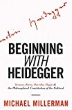
New book
Strauss, Rorty, Derrida, Dugin and the Philosophical Constitution of the Political
Beginning with Heidegger is an in-depth examination of the influence that Martin Heidegger’s inceptual thought exerted on Leo Strauss, Richard Rorty, Jacques Derrida and Alexander Dugin. How did these vastly different thinkers employ Heideggerian concepts to define their own philosophies and often antagonistic politics?
Rauno Huttunen and Leena Kakkori
At its best, qualitative research works like a great poem, causing the reader to experience ‘evocation’ and to see the world through different eyes. Then a new horizon opens, and this process Heidegger describes as the ‘happening’ (Ereignis) of the truth.
[I]nsight is the essence of technology and down in the engine‐room is the impulse drive,
the dopaminergic reward circuit.
Public philosophy groups
We are an international network of 43 public philosophy groups with a combined membership of over 50,000 people. Our groups have held thousands of public philosophy events in total.
I am currently in two virtual Heidegger exegetical reading groups
in my time zone;
Basic Writings on the Discord D&GQC server (instructions for joining Friday's discussion)
and Nietzsche 3-4 with the Phoenix Philosophy Meetup Group. Go live!
Michael Josiah Mosely
Profound boredom is in fact, for Heidegger, the mood connected to originary time; it can be said that through the setting forth of the earth in the dead time of L'eclisse we may become attuned into profound boredom.
Daniel Fidel Ferrer
An Index to Martin Heidegger’s (1889-1976) two printed volumes Zum Ereignis-Denken; Gesamtausgabe Volumes GA 73.1 and GA 73.2 (published in October 2013).
slows down and unclutters the time-space of our existence
No experience, no matter how ursprünglich, can disclose an embedding dimension of
the distinction horizon/Open because all experience takes place only within and by
virtue of the horizon/Open, sense-making, affective/cognitive ‘taking-as.’
Steven Crowell
It is one thing to say that a better account of life is found
in Aristotle's Ethics than in post-Cartesian subjectivistic theories; it is quite
another to say that philosophy itself is essentially phronesis. That is simply
the obverse error of the theoretism it is supposed to replace.
Hence Heidegger’s famously eponymous recommendation to us
that we use technology but without letting it "entangle" us.
We are, that is to say, to employ technological devices and
practices while detached from them, able to "let go of them
any time", able in other words (and it is this that seemingly
defies us today) to "let them alone".
Clare Pearson Geiman
Prior to 1934, Heidegger consistently interprets
τέχνη as the know-how that pertains to handicraft; after 1934, Heidegger
turns to τέχνη itself, and to his original blurring of τέχνη with φρόνησις, to find
the possibility of a higher knowing that unifies them in a reconceived τέχνη.
In-between Sartre's "Existentialism is a Humanism" and Heidegger's "Letter on Humanism"
Joanne Faulkner
By forming her response to Heidegger from the passages of his own text—but
from a perspective distinct from his own—Irigaray puts into question the unarticulated
ethical implications of his positive ontology. She ‘clears the ground’, to employ a
Heideggerian motif, so that the “previously neglected powers” of his philosophy may be
released.
In 1930 Heidegger gives untruth a special name, die Irre, ‘errancy.’
...
Because we ek-sist and in-sist by these
systems we “already stand within errancy,” for the dynamics of these systems inherently
produces error and illusion; Irre is constitutive of existence as a modality of sense-making.
Martin Heidegger
translated by Roger Berkowitz and Philippe Nonet
Brian Bard
The event of φύσις is as much the event of rising into unconcealment as that of suppressing into concealment; for all that comes forth into shining much remains left behind in oblivion.
Jussi Backman, Taylor Carman, Daniel O. Dahlstrom, Graham Harman, Michael Marder, Richard Polt
Taking Heidegger’s proposals into consideration, we can ask: Do we need an alternative to presence as an understanding of being?
Eric Sean Nelson
[H]ow Dasein
responds to interruption is the key to its individuation: Whether the break itself is
recognized as such and its questionability intensified or whether it is excluded as
nonsense – as the “nothing” is habitually disclosed in average existence – or – like
death – integrated into the identity of everydayness.
Gregory Fried
The polemos, rather than the idea, captures what Heidegger believes is most important about
human existence: that it is finite, connected to a specific tradition rather than the universal; that it
is temporal rather than linked to the eternal, be it the forms, God, or secularized versions of these,
such as human rights; and that it is historical rather than an abstraction based on generalized
characteristics of human nature.
Joydeep Bagchee
The crucial point, as Heidegger emphasizes, is not to trace
Verstehen down to the innermost constitution of transcendence,
but to note its “essential unity” with “finding oneself …”
(my translation of Befindlichkeit) and with “thrownness.”
To see the gleam or hear the ‘pure noise’ of meaning requires the occurrence of some mode of ma, a darkness or a stillness, a rift in the continuum of Bedeutsamkeit.
Martin Heidegger
Translate one with circumspection during the corona circumscription.
Lawrence J. Hatab
Heidegger did not think that
fundamental ontology was a strict departure from, or replacement for, the Western
philosophical tradition. The meaning of being as he saw it was simply concealed
within, and even implicit in, that tradition.
Concordance
The difference between authentic and inauthentic choice
appears to rest in the extent of freedom for repurposing, redirecting, and so on. Whereas
inauthentic choice takes the inherited possibilities as simply given ‘in themselves’ for
reactualizing or not, authentic choice takes them as ‘empty,’ for reinterpreting and
refabricating to cope with one’s thrown circumstances.
Dermot Moran
In Beiträge zur Philosophie (Vom Ereignis), Heidegger also acknowledges that his speaking of
‘human Dasein’ in Being and Time and elsewhere had been misleading –
since it suggested there might be another kind of Dasein, e.g., animal or plant Dasein. In fact, only human beings can be Dasein.
[Next Page]
Created 1995/4/18
Last updated 2026/6/20
Pete