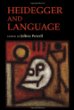
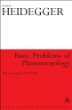
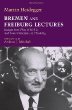
[T]hrown-open or appropriated ex-sistence, as the clearing, is responsible for all
forms of the meaningful presence (the being) of things. Es gibt Sein because Ereignis gibt Sein,
that is: The reason why there is “being” (the meaningful presence of something) at all is
that the appropriation of ex-sistence to its proprium as the clearing makes that possible.
The 50th Annual Meeting of The Heidegger Circle 2016
[W]e can say that Enframing does not primarily
concern the content [Gehalt] of phenomena called human-technology relations, but concerns
a relation [Bezug] that we already enact [Vollzug] in encountering these phenomena.
Understood on this ontological level, Enframing means a reciprocal setting-upon
[stellen] of being and thinking with regard to function, which is technical
inasmuch as utility marks the main trait of the horizon toward which all experiential
correlations are oriented.
In the entire scope of what is classified fundamentally, everything exists without
conscious linguistic naming or self-conscious, reflective consideration; instead every
thing is known in terms of its use, its purpose, its teleology – everything appears in
terms of how it will matter for us.
Die Herkunft der Kunst und die Bestimmung des Denkens (Vortrag in der Akademie der Wissenschaften und Künste in Athen 4. April 1967), GA 80
Translated by
Dimitrios Latsis
[W]hat is the reason for
this discussion of cybernetics, futurology and industrial society? Have we not,
in so doing, strayed too far away from the question of the provenance of art?
Indeed, it would appear so — and is, yet, not the case.
Snow White is still struggling with the fallenness of following a role assigned to
her by society or the “they-self” and has not reached the point of making an authentic choice of
her own future.
Of course Faye may be subjectively convinced that the claims he makes are both exact and true. But philosophy demands more than mere assertion of strongly held convictions without evidence to support them. And above all, philosophy demands intellectual honesty in advancing one’s claims—and in retracting them after one has been shown in considerable detail why those claims are unsupported and unsupportable.
[I]t seems that it is being that is “between” man and things.
It founds their ontological kinship. Being is not therefore
limited only to a man, but being embraces also other beings making them “appropriate for
themselves.”
Heidegger and Shiva agree, then, that modern science and technology together constitute
a reductive and violent assault that limits knowledge. Where they part ways,
further analysis does not uncover disagreement, but shows that each has something to contribute to the thinking of the other.
According to Heidegger's own statements (which of course do not have to be taken
as the final source of evidence), from 1937 on, at the time of writing the
Contributions
to Philosophy - From Enowning
, the word 'propriation' or 'enowning' assumes
a position as principal word in his thinking. The essence of technology is also
thought through in the 1940s under the aura of propriation. In an unusual text from
the fifties, Identity and Difference, [...] Heidegger talks of a twisting
of the set-up into propriation, of the "sudden flash of propriation" within the
set-up. In this text there is a sort of toggle relationship between the most extreme
consummation of metaphysics and the twisting of metaphysics into propriation, a
'getting-over-metaphysics', in which humans would "lose" their determination of
essence which metaphysics has "lent" them.
Enigmatic Origins Tracing the Theme of Historicity
through Heidegger's Works [PDF] 120 KB!
Hans Ruin
The task therefore becomes not one
of specifying a primordial level of temporal existential projection, but
of developing a reflection that may somehow do justice to the enigmatic
giving—the Es gibt—in which both time and being are given to man.
This attempt eventually culminates in the account of Ereignis as an
event of truth, as αλήθΕΐα. However, it is also an attempt for which a
whole range of "historical" concepts are activated: being is here
designated as "history," as "sending," and as "happening"
(Geschichte, Geschick, Geschehen).
From
The Beginning of Western Philosophy
Interpretation of Anaximander and Parmenides
Heidegger‟s retrospective commentary on his reconceptualization of the work of art
underscores clearly the need to understand the setting-into-the-work of truth as Ereignis,
specifically because the truth of being transpires solely as event. While the double, true and false, etymology of
Ereignis that links it to manifestation and propriation is well known,
the publication of the so-called private manuscripts, including the most recent volumes 73 through 76,
makes clear the significant degree to which Heidegger inflects the valence of the
term Ereignis through the prism of singularity (Einzigkeit).
Shared, meaningful contexts
consistently invite the presence of others without demonstrating that this very openness functions
by perpetuating an attitude towards others that is characterized by a blindness to particularity and
contingency. An appropriate response to others would involve a sensitivity to their implicit
participation in our projects by way of our shared contexts.
This is surely one of the vanities of philosophy – that
philosophy can guide politics, that it can provide the ground for political decision. If,
however, we take the recognition of the failing character of thinking as lying at the
heart of philosophy, as perhaps it ought, then perhaps the proper and only role for
philosophy in relation to politics can be one, not of decision, but precisely of constant
questioning
The oddest part of Heidegger's account of Dasein is the body.
He admits its kinship with animals yet denies that it is an animal body.
He thinks the meaning of the body comes from openness to being;
handicraft, gesturing, dancing, etc. are what they are due to openness to being.
Heidegger also came to grasp autochthony as the name for an understanding of history as a destiny
[Geschichte als ein Geschick] to which we primordially belong and through which we are
appropriated by the gift-giving power of being (what he would term Ereignis).
Heidegger proceeds to assign an ontological status to the relation between people
and state: that is, what it means for a particular people to be must be established
through its state. While he leaves open the question of what a people in general is, he
claims that the state is not just ‘grounded in the Being of the people’
but is the Being of the people
In improvising from latent possibilities, those that are dormant in Greek mythology may be as relevant for Heidegger's
thinking of Ereignis as is the violence he does to Greek etymologies.
Heidegger doesn't posit some “golden age” in which aletheia, for example, was actually experienced as unconcealment,
but that interpretation can be exchanged for our usual understanding of truth in such a way that adequatio gives way
to an improvised having-been where a latent possibility becomes an actualizable potential.
This can be couched in the following terms: philosophy is all right, but in this intellectual marriage demanded by Wheeler, it is science the one with preeminence when it comes to the postulation of existing objects. Escaping the Cartesian mindset does not impose on us an obligation of forsaking the grounds of a
scientifically informed philosophy. We are, after all, Muggles, and must abide by nonmagical methods and by the constraints they impose.
Heidegger’s reflection on the essence of technology cannot claim to be already
an alternative way of bringing forth, but is primarily concerned about
the right way to come into the hermeneutic circle, to move in the circular
course of the challenging of man and nature in the technological age and
at the same time to hold back in order to experience the essence of technology.
Heidegger’s account of his fundamental concept, the Ereignis, the opening of the Open (Sheehan, 2001:
p. 5; Wheeler, 2011: § 3.1, 3.2.) provides a far better model of Wittgenstein’s point in Z608 [p. 608 of Wittgenstein’s Zettel].
The paper argues, first, that Z608 is not making a sudden inexplicable venture into verboten neural theorizing,
but is describing something akin to Heidegger’s Ereignis, and, second, that comparing Wittgenstein’s and Heidegger’s respective
views illuminates them both.
[T]he turn consists in grounding our understanding
of Being in a realist manner. For this purpose Heidegger
introduces the concept of destiny (Geschick), which simply
means that we each find ourselves in what is ultimately a
completely groundless and thus arbitrary understanding of
Being, which is simply there. The event (Ereignis) has no
source, no agent – this is Heidegger’s interpretation of the
death of God.
Ereignis is much more than an event:
it is a fact, that which is always already done (factum).
Appropriation is that which “is already operative in our case, even before we
were.” What is more, it is the fact, the “Urfaktum” or
“thing itself,” without which there are no other facts, events, or happenings in the human realm.
From Bloomsbury Academic
A new book of essays
The Bloomsbury Companion to Heidegger
Edited by
François Raffoul and Eric S. Nelson
With contributions from François Raffoul, Eric S. Nelson, Ted Kisiel, Dermot Moran, Thomas Sheehan, Richard Polt, Robert Bernasconi,
Françoise Dastur, Alfred Denker, Sean Kirkland, Holger Zaborowski, Emilia Angelova, Frank Schalow, Peter Trawny,
Ullrich Haase, Leslie MacAvoy, Peter Gordon, Peg Birmingham, Andrew Feenberg, Scott Campbell, P. Christopher Smith,
Dennis Schmidt, Gregory Schufreider, Gregory Fried, William McNeill, Andrew Mitchell, Lee Braver, Andrew Bowie,
Anne O'Byrne, Kevin Aho, Daniela Vallega-Neu, John McCumber, Gregory Schufreider, Iain Thomson, Ben Vedder,
Patricia Glazebrook, John Russon, Kirsten Jacobson, Hans Ruin, Daniel Dahlstrom, Wayne Froman, Iain Macdonald,
Jill Stauffer, Leonard Lawlor, Janae Sholtz, Leslie MacAvoy, Tina Chanter, Robert D. Stolorow, Bret Davis, and Alejandro Vallega.
In general, Heidegger’s concept of Gelassenheit
is interpreted as ‘indifference’ to ethical duties, as a quietism that withdraws from the world.
What these authors fail to see, is that Heidegger does not embrace quietism, but puts into question this whole distinction between active and passive.
The Event, in contrast to the Framework, is thus in noway a ‘violent’ mode of revealing,
but allows things to come forth in theirdifference and unity, in their distance and their nearness.
Unlike the Framework,the Event allows the fourfold to appear in terms of the mirroring interplay, the‘round-dance’,
of the elements that are brought to appearance within it.
[P]osthumanist theory is both inspired
by Heidegger and pushes off from him. In other words, what links the various posthumanisms
is a common, Heideggerian-inspired attempt to overcome the logic of binary
oppositions of humanistic anthropocentrism that departs from Heidegger’s insistence
that doing so requires and must emanate from a primordial inquiry into the question
of the meaning of being.
Ereignis would be Being as the revelation of Being to itself qua the thinking
of Being by human beings (i.e. the region of itself which is clear to itself).
Heidegger’s rendering of Being as Ereignis is antihumanistic inasmuch as it
configures human beings as the place of Being qua event, but not as the
conceptual/ethical centre of the universe and/or history. Simply put, Being
in itself transcends human beings.
According to Heidegger, memory, in its original sense,
is not just a thinking or recalling of past events as we are used
to taking it. Moreover, it is a thinking and at the same time a
thanking of past, future and now, a meditative state of heeding
that which is gathered and compressed in the living present.
For both, philosophical investigation is a way of bringing what we already prereflectively understand into
the light of thematic explicitness. And what both philosophers bring into thematic explicitness are aspects of our
context-embeddedness and of our finitude.
And it’s that
strange combination of esoteric, almost mystical
texts (like “Die Kehre”) with scathingly direct
political texts (like “Das Gestell”) that
makes Einblick in das, was ist (along with, say,
“Überwindung der Metaphysik” and “Zur
Seinsfrage”) among the most important (and
most neglected) of Martin Heidegger’s post-
Kehre texts. And also among the most difficult
to translate.
The word Ereignis, which becomes the keyword of Heidegger‘s thinking from the mid-1930s on,
is here appropriated from Hölderlin‘s hymn "Mnemosyne,"
which speaks of the sich ereignen, the "coming to pass," of the true
A philosophical investigation of the shamanic drum.
With contributions from Daniel O. Dahlstrom, Walter Brogan, William McNeill, Richard Polt, John Sallis, Krzysztof Ziarek, Daniela Vallega-Neu, Robert Bernasconi, Dennis J. Schmidt, Jeffrey L. Powell, David Farrell Krell, Françoise Dastur, Peter Hanly and Christopher Fynsk.
But there is a Heideggerian supplement to the
abground not found in Bohr: the event of
lighting-up or dis-closure, an appearance of
the everyday world. Heidegger problematizes
“world,” rather than taking it for granted.
What Heidegger seems to want to teach
us is not either how to become philosophers or how to be with
one another in a concrete manner but, rather, how to remain in
dialogue with ourselves while being with others or how to
become philosophers in the company of others.
Mary-Jane Rubenstein on metaphysics and ontotheology.
Richard Capobianco on Heidegger on Hölderlin on 'Nature's Gleaming'.
Heidegger and 'The Greek Experience' of Nature-Physis-Being.
From
Between Word and Image
Heidegger, Klee and Gadamer on gesture and genesis
In situating where and how works of art, carry, disclose, or open up truth,
we come to recognise that the work of art posits the question of man.
As Heidegger submits: "Being needs man and is not without man."
Though Heidegger never escapes the Kantian correlation
between thought and world, both composing half of any situation we can talk about, he would not treat the
orange as simply an enduring core within the visible realm. For Heidegger there is always withdrawal (Entzug)
behind all presence, and the name of what withdraws is Being.
Heidegger derives his main point about the temporality, the “subjectivity” of the pure subject in Kant:
it is not some fixed (innate) a priori transcendental unity, contained in a consciousness.
Rather, it is the open temporality of relating to being that “affects our concepts and representations”.
Let us also acknowledge that one cannot read Heidegger without a kind of drunkenness,
that particular drunkenness which German philosophical wines of the best vintage give.
[B]eing, time and space need human being for their eventuation.
Hence, modern science's postulation of and insistence on the 'objective reality' of space and
time is an illusion insofar as there is (i.e. It gives) objectivity only for subjectivity,
and human being cast as subjectivity is only one particular historical casting of human being that still holds sway in our own epoch.
It is only ‘properly speaking’ (eigentlich) that dao can be said to refer to
Weg. This means that only when interpreted in the particular manner, or thought in its proper
nature as Heidegger may ascribe to it, can dao come into relation with Weg.
Weg is the standard against which dao is measured. The same consideration applies to the
relation between Ereignis and dao.
Gatherings: The Heidegger Circle
Annual
Volume 3, 2013
Jesús Adrián Escudero,
David Nowell-Smith,
Sophie-Jan Arrien,
Raoni Padui, Wayne J. Froman,
Hakhamanesh Zangeneh
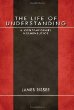
From
The Life of Understanding
A Contemporary Hermeneutics
James Risser
New directions in hermeneutics and new possibilities for “the life of understanding” and “the understanding of life.”
The Blind Brain Theory actually possesses the resources to reinterpret a number of the early Heidegger’s central insights,
thrownness and ecstatic temporality among them. The focus here, however,
is the Ontological Difference, and the kind of hermeneutic logic Heidegger developed in an attempt to mind the distinction between being and beings,
and so avoid the theoretical sin of reification.
From
The new translation
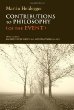
Contributions to Philosophy (of the Event)
Martin Heidegger
Translated by Richard Rojcewicz and Daniela Vallega-Neu
The transition from B&T and Heidegger's later thinking in plain language.
Heidegger’s tool‐analysis holds good for even the most stupefied forms of inanimate
causation. But this means that the linguistic turn and all other forms of the
philosophy of human access are shattered by Heidegger in a single blow. The
relation between humans and the world is now merely a subset of the general
relations between one withdrawn object and another.
Gatherings: The Heidegger Circle Annual
Volume 2, 2012
Krzysztof Ziarek,
William McNeill,
David Nowell-Smith, Adam Buben, François Raffoul
In Heidegger’s view, the danger of technology, including biotechnology, is
not that something might go terribly wrong, but, quite the contrary, that
everything will actually function smoothly.
Recently published
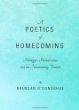
A Poetics of Homecoming
Heidegger, Homelessness and the Homecoming Venture
by
Brandan O'Donoghue
An investigation into the theme of homelessness in Heidegger’s discourses.
Heidegger suggests that for modern eyes, the “political” is the way in which history
is accomplished, and as such is itself unquestioned. The failure to question the
“political” belongs with its totality. The totality of the political is not simply based
on the arbitrary wilfulness of dictators, but in the metaphysical essence of modern
actuality in general.
From
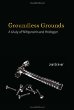
Groundless Grounds
A Study of Wittgenstein and Heidegger
by
Lee Braver
The common threads in both thinkers and how to understand them together.
[T]here is an incipient
distinction between ‘place’ and ‘location’ in Heidegger's late work. Heidegger articulates a
relationship between the opening that allows an event of appropriation (Ereignis), which
defines an epoch in the history of Being, and the dwelling of mortals in place (Ort), or
among places, in which language plays a mediating role as the way in which Being speaks
mortals.
Huebner’s critique of learning in social efficiency ideology is linked directly
to Heidegger’s interpretation of the Cartesian world of objects, for if we are
perceiving the classroom in such impoverished terms, focusing only on the
objective features of the things we deal with, their present-at-hand attributes, their
abiding presence, educators are missing the fact that things and people always
reveal themselves in a larger context, within a context of meaningful relations,
which cannot be reduced to the knowledge of things available to us by way of
thematizing the world.
Heidegger shows that pathos is not an incidental concept or a mere
“byproduct” of other concepts, such as substance (οὐσία) or being (to einai). Instead,
Heidegger pulls pathos out of the (traditional) shadows and shows its intricate connection
with the groundbreaking concepts of being, movement, disposition, embodiment, and
logos.
[A]rt opens and readies Dasein
for its authentic communal and historical Being . . .
in the “work-being” of the great work of art as the Ereignis, the lighting and clearing event of
truth’s happening (aletheia), the temporal event of appropriation of the historical destining of
Being, which is facilitated by Dasein’s participation in and preservation of the great work of art.
In order to avoid the epistemological preconceptions built into the traditional terminology of thinghood and
to overcome the temptation to discuss entities as pieces of inert matter, Heidegger introduces a set of new
concepts, the most important of which are the concepts of dealing (Umgang), concern (Besorgen), and
equipment
(Zeug)
.
What Heidegger misses in his description of the Hegelian "experience" as the path of despair
(Verzweiflung) is the proper abyss of this process: it is not only the natural consciousness
that is shattered, but also the transcendental standard, measure, or framing ground against
which natural consciousness experiences its inadequacy and failure - as Hegel put it, if what
we thought to be true fails the measure of truth, this measure itself has to be abandoned.
[D]espite Heidegger’s rejection of resistance as an argument for the self-existence
of the external world, Dilthey’s notion of resistance is appropriated and transformed
in Heidegger’s thinking of life’s phenomenality and facticity.
Returning to the Greek beginnings of philosophy in a manner more radically than
Hegel's provides one way out of the encapsulation of the mind within the subject
which consequently has to communicate with the world through re-presentations in
its consciousness. Heidegger practises precisely such a return to Parmenides in
some of his late and latest writings, which will be tapped here to consider whether,
in comparison to Kant, Parmenides was in his right mind.
Digital ontology concerns our understanding of Being. We believe that we understand
something in its being when we are able to re-make digitally. Within the digital
casting of Being we look at humans as they are online instead of embracing the digital
within the "life-world" (Husserl).
In the Ister lectures, Heidegger presents poetry as the primary linguistic means
for allowing beings to emerge into appearance—not for purposes of usefulness or
manipulation, but simply to let beings be. This includes the realization that what
it means to be German remains rooted in the ground of what it once meant to be Greek.
These issues of autochthony, for the poet and his people, allow Heidegger to revisit
related concepts from Sophocles' Antigone.
School of Philosophy at The Catholic University of America
Heidegger’s project is to get back to the original question of Being that was asked
by the Greeks and to ask it in a more primordial way, which means that he must begin
his investigation of Being in a “pre-theoretical” way. The traditional theoretical
approach to the question of Being, according to Heidegger, regards the thinker and
the object of its thought as being indifferently detached from one another.
Heidegger writes that any experience, object, emotion or event can be understood
within its context. Because There-being has a world and is its world, all innerworldly
beings, all that exists for There-being, is in that world - in a particular way.
Because There-being has the ability to understand any person or event as a sign,
as meaning something, within the context of the referentiality of all persons and
some things.
How does the god enter philosophy? he explains, “leads back to the question, What
is the origin of the ontotheological essential constitution of metaphysics?” [...]
God’s entering—or perhaps we ought to say his being dragged—into the ambit of human
thinking is the determining event in the Western metaphysical tradition.
The very supposition that there is (or even could be) a single meaning of being
in general is something that the later Heidegger argues we should transcend as part
of the ontotheological legacy of Western metaphysics—along with the very idea of
a creator God who stands outside the secular world, implicitly unifying the meaning
of exis- tence (that is, both the meaning of the universe and of our own lives)
from his God’s eye perspective or “view from nowhere”.
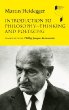
From
A new translation
Introduction to Philosophy -- Thinking and Poetizing
Martin Heidegger
Translated by Phillip Jacques Braunstein
Heidegger's last public university lecture before the end of World War II.
Human beings can only make music through being attuned to and listening to the quivering
that grants attunements. That is, it is the originary quivering that enables human
beings to be musical, thus being used by propriation (Ereignis) to allow music itself
to make way to music.
Gatherings: The Heidegger Circle Annual
Thomas Sheehan,
Richard Polt, Jussi Backman, Andrew J. Mitchell, Lawrence Hatab
Making the implicit lead understanding of being for the ancient Greeks as standing
presence explicit allows Heidegger to break with the metaphysical casting of human
being, in order to recast it as exposed ex-sistence (standing-out) in the temporal
clearing of truth, the Da. Truth is now not a property of statements, but the disclosedness
of beings to Dasein in the clearing.
[S]ince there can be non-symbolic, non-linguistic worlds, what Heidegger calls 'world'
in Being and Time is not identical with any recognizable sense of 'language',
including Heidegger's own later use of that term.