
New book
Heidegger and Kabbalah
Hidden Gnosis and the Path of Poiēsis
Elliot R. Wolfson
Conceptual resonances of hermeneutics, temporality, language, nothingness and being in the Kabbalah.
MORE

Heidegger Schwarze Hefte (1931-1948)
Martin Heidegger Esoteric Writings
Anmerkungen I-V (Schwarze Hefte 1942-1948)
Martin Heidegger on the Greeks
Being and Time, Sein und Zeit (1927)
In proper thinking as non-willing, one is released from the will to determine the being of beings on one’s own, by transcending or “stepping over” beings to form a horizon of meaning in which they are then allowed, or compelled, to show themselves as objects. And one is released into a relation of waiting upon, listening and responding to, that in which one belongs.
Heidegger takes his bearings from Aristotle precisely because Aristotle still retains the plurality of the uncovering attitudes of human life and, in the 6th book of the Nichomachean Ethics, offers the first systematic analysis differentiating the three fundamental uncovering attitudes of the soul, to wit, θεωρία, ποίησις and πρᾶξις, together with the specific forms of knowledge which go along with them, namely, σοφία, τέχνη and φρόνησις.
So Heidegger claims that human existence – the sense-making life of ever generating what-fors and whys – is itself ohne Warum, without why.41 Which, again, appears to be another way of saying that being-in-the-world is devoid of intrinsic nature: no svabhāva; only dependent origination, thrownness; pratītyasamutpāda, Geworfenheit.
New book
Conceptual resonances of hermeneutics, temporality, language, nothingness and being in the Kabbalah.
MORE
Let me know if you find something in this bibliography that's not already on this web site.
Fundamental ontology has to unfold itself under a theological epoché and only on the basis of what is so unfolded, one can turn to the god-question as one of the regional ontologies, which would provide the ontological basis for a specific theology as a positive science like Christian theology.
[U]niquely because of the nothing, that is, when the human being is held out into the nothing, hovers over it, and holds the site of nothingness in Dasein, is there questioning, thought, philosophy, culture, technology, etc.
But, and of course, it transpires that there is no ‘secret’ to the secret notebooks (understood as a covert or concealed texts) and saying so seems to be a cover term for expressing difficulties in commandeering open ‘access’ to archives that are not archives at all but family papers held by aphilosopher’s sons.
In 1927 Heidegger published Being and Time; in 1928 Sturges published his mortgage article; in 1929 Wittgenstein returned to philosophy. All three and others were non-colluding instigators of this inversion: the Umschlag from svabhāva to pratītyasamutpāda – the turnover from the metaphysics of inherent being to the phenomenology of Geworfenheit, thrownness, mutually conditioned origination – ‘relationality’ in Andrew Mitchell’s term.
Is what we have said above really what Heidegger meant? Finding out whether the preceding five points do in fact represent what he was driving at throughout his career would require revisiting and rethinking most (if not all) of the 96 (and soon to be 102) volumes of the Gesamtausgabe.But who is up for such a lifetime of research?
For Heidegger, time is the fundamental existential category: an authentic grasp of time allows Dasein both to project itself or ‘run ahead’ (vorlaufen) to the very edge of its existence and to lay hold of the way in which its past lives on as a ‘having-been’ (Gewesenheit) within a present which is consequently ‘stretched’. Time therefore unifies Dasein within a threefold model of ecstatic temporality.
New printing
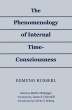
The Phenomenology of Internal Time-Consciousness is a translation of Edmund Husserl’s Vorlesungen zur Phänomenologie des inneren Zeitbewußtseins. The first part of the book was originally presented as a lecture course at the University of Göttingen in the winter semester of 1904–1905, while the second part is based on additional supplementary lectures that he gave between 1905 and 1910.
The viewer, as preserver and participant, is there with the images and what is depicted in and through an attuned mode of dwelling in the midst of the image, Being-in the midst of the world the images open and establish.
Glancing forward to Heidegger’s take for a clue, we read that “Da-‐sein expends itself primarily for itself as a being that is concerned about its being, whether explicitly or not. Initially and for the most part, care is circumspect taking care of things. Expending itself for the sake of itself, Da-‐sein ‘uses itself up’.” That account emphasizes the experience of ongoing dissipation.
Heidegger, in his work of the 1920s and beyond, will in effect inaugurate a new thinking of possibility that will exceed the parameters set by the first, Greek beginning of philosophy, which became established in Aristotle’s ontology.
The analytic moment (μαθών) aims at showing
how ex-sistence is the Open (cf. SZ I.1-2)
what ex-sistence as the Open does (cf. SZ I.3).
Contributors:
On Sheehan’s interpretation whenever Heidegger claims “It is not we who ...” he’s not implying “It is that weird thing over there which ...” Instead Heidegger is referring to the Dasein im Mensch, the existential-structural openedness in people, a structural component we may experience, if we do, as something ‘other.’
In Heidegger’s argument, time cannot be said to be constituted by the subject, as existentially reinterpreted temporality constitutes the very sensibility of Dasein’s being from the unchosen thrownness of birth to the inappropriable facticity of death, which indicates two occasions that define human Dasein while defying the meaning and sense-making activities of the subject.
In Heidegger’s thought, since DASEIN is his own possibility, we can never speak of him as something completed, something stable or fixed. DASEIN never quite is. He is constantly realizing his possibilities.
Thus, in keeping with Augustine, Heidegger defines “time” as “the fact that I am dis-closed.”163 But along with this “distance,” human being also “returns to” (i.e., remains with) itself and the things it encounters as it renders them meaningfully present in terms of one or another possibility.
I can no longer google the link to the original PDF.
The question as to whether your philosophy is or is not Ex-istenzphilosophie matters rather little to me.— In a sense, Plato’s philosophy is Existenzphilosophie. The death of a man who is Socrates, and his existence, is at the center.
In terms of the concept we started with, these disparate forms of being which happen to individuals (and groups) are the polyethism characteristic of human being. Both Brooks and Heidegger hold out the prospect of mokṣa, release bondage to this delusory, labile ‘fleeing.’
The task of the histōr is to make the death intelligible as ___ and to show that some or another remedy thus ‘makes sense.’ If that can be accomplished then the breakdown, the neikos, may be repaired and the polis maintain its peace a while longer.
Do we need an alternative to presence as an understanding of being? If not, why not? If so, why, and what could the alternative be?
This book aims to be an accessible but serious 'general introduction' to Being and Time as a whole; the intended reader is a 'novice', for everyone newly confronted with Heidegger lacks much of the background necessary to 'put together' a full conception of what he is saying.
The resultant conceptual description is Dasein (human)-made theoretical constructs of a certain universe of activities. The construction explains a machine (the grand diagram), its slices and how its things behave, and their flows and submachines that are inside a definite enclosure or in the Heideggerian language a certain gathering.
[Heidegger at Zollikon] goes on to discuss the way science works, all of which he also and already has laid out in Being and Time, but which he here states more plainly and we could call this the articulation par excellence, and pace Richardson, of a Heideggerian philosophy of science which also happens to look a great deal like other philosophies of science
Heidegger is adamantly ‘essentialist’ on this point. Whatever it was or is – Einbruch, Ereignis, or whatnot – every natural process of differentiation is excluded; in addressing the human difference naturalism is the error of biologism
Heidegger is setting up a distinction between two types of technē. The first is a lower form of technē, which is unable to overcome Vorhandenheit (or presence-at-hand). ... The second is “great technē,” which sets-into-work being itself as unconcealment.
The positioning of education, the thing-ing, was rampant in Heidegger’s time as it is today and it may be for this reason that Heidegger leaves those who follow his thought with much to ponder.
The challenge is not just to interpret Heidegger, but to think and act today.
The Heideggerian notion of “In the World Being”, could provide, in the right context, an idle fire escape for some burning questions of the Neurosciences.
Even if one claims the event of transformation as a complex unity of same-difference; Ereignis functions as 'more than' structure, it is the happening of what happens to a being.
Heidegger always preserves the phenomenological correlation between whatever is open/intelligible and the apprehending of what is open/intelligible. So, on the one hand, the kind of disclosedness of things is their meaningful (not just their sensible) disclosedness, and this occurs not off by itself in some pre- or extra-human scenario but only in and with the human apprehension of those thingsOriginal PDF
So the existential constitution of the ‘Da’ — the phenomenon of Entdecktheit, ‘discoveredness’ — has two principal components (if that phrase be permitted) — Befindlichkeit (‘disposedness,’ ‘state-of-mind’) and Verstehen (‘understanding’); roughly, the basis of affectivity and the basis of cognition. These two existentials are equiprimordial and co-occurrent: state-of-mind is never without understanding and understanding always has its mood.
Notes: Most documents at beyng.com are in HTML. Only PDF documents files require downloading. Most scholars share their documents on their own web sites or academia.edu. If that's too much of a bother, beyng.com can host your documents. Let me know.
New translation
Winter semester 1941-42 lecture course on Friedrich Hölderlin's hymn, "Remembrance".
MORE

According to Carpenter, the Inuit’s conception of space and time is a unity (this is reflected in the Inuit word tima, which means, “here-now” and of each situation as a ‘dynamic process’. This resonates with Heidegger’s view that space and time form a unity that is delivered over to historical agents by way of the giving characteristic of appropriation (Ereignis).
Heidegger's review of his time as rector takes neither the form of an apology nor a straightforward defense but was written as an indictment within a conspiracy theory that he can finally only explain in spiritual terms.
Just as Schreber in his madness always insisted he did not choose to become God’s woman – it wasn’t his idea – so Heidegger’s recurring expression ‘it is not we who ...’ characterizes our openness as in some sense the ‘obediential potency’ of sense-making, the passive middle point of meaning: “We never come to thoughts. They come to us.”
I will speak, therefore, of a word. Of the simplest of words, and the most significant. ... I will speak of the simple word ‘is.’ Which, in two brief letters, carries the whole burden of the ‘meaning’ or ‘sense’ of B/being in the Western metaphysical languages. But which scarcely exists, and is often not spoken or written except as the meaningless sibilant: ’s.

has published
Restores philosophical balance to the debate.
MORE

Heidegger’s god is not a god that we need, a god that we call on to answer our questions, so much as it is a god who needs us, a god who calls on us to play our part in the grounding of a meaningful world.
The faculty for shifting paradigms and the faculty for modifying self-interpretation are the same – insight. Heidegger repeatedly insists on the primacy of insight; in the first instance for the necessary changeover from the ‘natural attitude’ to phenomenology
We contend that the comic is an articulation of technological and aesthetic revealing: the intersection of the totalising ‘danger’ of technology and the ‘saving power’ of art.
What Heidegger’s concept of Dasein’s helps to illuminate is the projective character of the viewer. In Heideggerian terms, it is the viewer, by virtue of Dasein’s de-distancing, projective character who traverses the “distance” to what is depicted on screen.
has published
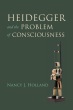
Engages with the depth and breadth of Heidegger’s work as it opens space for a discussion about the uniqueness of human consciousness.
MORE
Sheehan is not content with the mere rebuttal of the mistaken hypostatization of being or the firm establishment of the alternative thesis of the foundational correlativity of man and being. In fact, Sheehan argues for a much more radical and, it must be said, much more contestable position, namely that, contrary to the received view, being as such is not really Heidegger’s main topic at all.
Fundamental to Being and Time is the manifestation of this thematic pair in Dasein: das Man as the exploitative pole, the anticipatorily resolute self as the exploratory. Which brings us back to the contrast of principled with an-archic freedom.
It is because of the inherently intentional dimensionality of consciousness that we are able to become our machines, that we can become, as a military unit does, to use a familiar and very military metaphor, like a well-oiled machine because we project ourselves into our machines: our machines, our selves. Thus Heidegger focuses on Machenschaft, mechanization, a can-do-ability along with gigantization in his Contributions to Philosophy, including his reflections on the last god, including his fugues, all very much in the sense that Ernst Jünger would speak of Titan-Technik, that is to say, literally titanic technology.
has published
Shifts of themes and concepts in Heidegger’s non-public writings from 1936 to 1941.
MORE

and
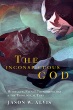
Heidegger's inconspicuous and the religious experience through French phenomenologists.
MORE
If freedom is understood as a foundation, if yet in its abysmal character, then we recognize a repetition of the aspirations of German idealism, to create a system of freedom, where freedom functions as a first principle. But Heidegger’s aspiration already at this point should be read as directed elsewhere, toward freedom as the opening toward that which is,
Movies themselves play a part in the drama of human self-revelation in that their making exhibits the florid exuberance of the as-structure. The phenomenon of the ‘as,’ Heidegger says, is “the structure that belongs to understanding as such.”
Dasein’s characteristic niche-making forms a colossal heat engine; in its engagement with nature the peculiar process of ‘projection,’ ‘taking-as,’ entwurfen etwas auf/als etwas, which we essentially are, produces entropy. Ereignis then designates the biosphere’s discontinuous transition (Einbruch) to this new kinetic regime of self-structured disordering.
If we are to get some appreciation of how Heidegger, or a Heideggerian, would look upon Marilyn Monroe's experience of the "world," we must begin by asking how the notion of world became problematic for Heidegger in the first place.
Contributors:
Heidegger’s attitude is stratospheric; he is ready to dismiss all the variety of technological relationships as inessential in comparison to the supposed essence of the phenomenon.
The zuhanden-vorhanden dynamic can be read as simply the gateway for overcoming presentism and objectivism, as a starting-point that counter-poses practical usage to theoretical examination, wherein usage opens up different and more original philosophical concepts.
Although the early state did not invent slavery it did invent, in response to the demands of administration, a new technology: literacy; a technology which more than any other instantiates positionality.
For Heidegger, beyond the conviction that we can get technology in hand, coupled with our ever greater confidence in techno-neutrality, a conviction, he tells us already in his first essay on technology, "delivers us over to it in the worse possible way."
For Heidegger, doctors who "think" are more than technicians. They question the assumptions of the natural sciences, make a concerted effort to situate the sufferer within his or her life-world, and attend to their unique experiences and self-interpretations.
After its fashion the Shimmer-generator is casting-forth a world by its rapid recombination of DNA resulting in an ecosystem quite alien to the native. With or without intentionality the Shimmer-generator is projecting a new world. The Shimmer-generator thus has broken through our ambit of sense, Umkreis, and irrupted into being-in-the-world; imposing its own radically other ‘sense.’
The radicality of Heidegger’s later position on Being as physis as aletheia lies, then, in this: Being is not strictly speaking dependent upon the human being as the site or dative, the “to-whom,” of Being’s unending temporal emergence and unconcealedness.
The ceremonial purpose of legislative prayer is to commandeer the divine and position it in the regime of orderable resource as backing, ground, warrant, legitimation for lawmaker's actions.
If Heidegger will eventually claim that animals have no world, not even an Umwelt, his earlier lecture courses show that this constitutes a reversal in his way of thinking.
What is inaccessible to thinking must therefore be absolutely excluded from the sphere of intelligibility. It follows that being/intelligibility as such must be completely and perfectly self-identical, self-sufficient, and unitary, safeguarded from any interaction with and from any reference to a nonintelligible outside or other of intelligible being-there. This is the core insight of Parmenides’ way of ἀλήθεια, of intelligible evidence, which is also the way of ἔστιν—understood in the subjectless and absolute sense of “there is.”
Translated by Pete Ferreira
Heidegger's thought represents a dense stitching of Aristotle's presence in our century. It does not give us a simple interpretation of Aristotle, but enacts a radical attempt at renewal with an invigorating understanding of the fundamental problems which for the first time are grasped in Aristotle's text and shown to Western thought.
The question then becomes: What is this Open or clearing itself, if we disregard the fact that “the side turned towards us” can also appear as the horizon of our presentational thinking? How is the clearing itself opened up?
There was nothing ‘‘open’’ about Heidegger’s passionate relationshipwith Arendt, and precious little in the long succession of affairs that followed.Instead, the fact that Heidegger was (rather nobly) raising as his own son a boy(Hermann) whom Elfride had conceived in an earlier love affair of her own seems tohave given Heidegger something of a lifelong ‘‘Get out of jail free’’ card (or, moreaccurately, a ‘‘Get out of Jail without a divorce’’ card), and one he played with afrequency that tormented Elfride.
Heidegger’s entire path of thinking can be understood—as he himself suggests on more than one occasion—as preparing the way for what he calls “the inevitable dialogue with the East Asian World”. And so, while many readers of Heidegger may be satisfied to focus on this or that text or period, this or that issue or step on his path, those who pursue the entire trajectory of his thinking will eventually find themselves faced with the inevitability of this dialogue.
Heidegger is hardly alone in being subject to this, if his circumstances do outclass other scholarly scandals. Philosophy is thus just what every textbook about philosophy suggests: a list of names for popular consumption. The great philosopher is identifiable by a Google or Twitter ranking. Maybe just, more soberly, by citation frequency.
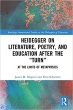
Routledge has published
by
MORE
Therefore, we can correctly say – where “correctly” means “in accordance with the intention of all his work” – that Heidegger’s efforts as a whole were directed towards knowing and embracing the facticity that we essentially are. To state those moments in classical Greek terms: first, “γνῶθι σεαυτόν” and then “γένοι’ οἷος ἐσσι μαθών”
The setting of Being into what appears as beings (in das Erscheinende als das Seiende) is the operation of the as-structure; taking-as is the technology of Dasein’s world-forming. The hand, says Aristotle, is the tool of tools. Taking-as, for Heidegger, is the technē of technai. (But not, he will insist, the essence of technology; technē remains ‘technological.’)
Being is the pure emerging of all that emerges (physis). Being is the pure manifesting of all that is manifest (aletheia). Being is the pure laying-out and gathering of all that is (the primordial Logos). This understanding of Being, although already in evidence in the early work, came into fullest view in his “later” writings and reflections.
Routledge has published
by
The work of Ernst Jünger and its effect on the development of Martin Heidegger’s influential philosophy of technology
MORE
If Wittgenstein were permitted just one critique of Heidegger’s account of the Ereignis, it would likely be that Heidegger too has been seduced by language. For even though Heidegger acknowledges the limits of language, he continues to violate those limits because “[I]n so far as people think they can see the limits of human understanding, they believe of course that they can see beyond these”. Specifically, Wittgenstein might well say that Heidegger description of the opening of an Open, a “world” in which beings can be present, is simply a mythological way of referring to the “world” of meaning.
So Freud’s conception of a topographical separation suggests the image of the clearing and the unconscious as each the attractor fundamental to its respective realm. Or, echoing Boss now, that each is a focus, like the mutualistic pair in the Lorenz ‘butterfly,’ of the single chaotic attractor that is human sense-making. The Freudian unconscious is then the co-ordinate second situs of ontology, the other clearing.
We can understand Being in this context as the self-withdrawing basis for the presencing, gathering, and ordering of beings, which must be heeded. What is key is that for Heidegger, we can participate more or less fully in this gathering; for it is not a collection of objects, or a highest genus, but rather essentially involves effort and force, which is characterized in terms of a standing and holding that holds beings in readiness, a stillness in which things are held in a tension.
[O]bject-oriented ontology establishes the domain of philosophy as a province of indifference, and anywhere that Heidegger would broach the subject of Dasein’s care or responsibility, any sign of a relation between the philosopher and the object of philosophy, Harman must convert such traces of philosophical praxis into an ontological logic to which Dasein has no significant relation. Object-oriented ontology thus entails the duplicitous thesis that the philosopher is indifferent to the object of philosophy.
Two recent papers from
[T]here is a depth to every “thing” that cannot be exhausted by the word, even the poet’s word. Every being is always more than what we can say or think about it; every being is always more—it exceeds or overflows—sense or meaning.
and
[T]he essential unfolding of kosmos/world/Being is structurally and temporally prior to the gods and human beings and in no way dependent on them.
The Alltäglichkeit in Being and Time and its outriders is the proto‐version of the Ge-stell in Heidegger's post‐war corpus. The everyday comportment of Dasein scaled up to higher levels of organization shows up in the later work as positionality, das Ge-stell, "the essence of technology."
[I]t is Heidegger's allegiance to reunification-within-the-origin which is most distressful-and most demanding of deconstruction. The same allegiance is revealed in the continual Heideggerian recourse to words prefixed by 'ge-', which connotes a gathering or grouping: e.g., Geviert, ge-eignet, Ge-stell, Gemiit, Gedichtnis, Geschick
New in paperback
Winter semester 1925 lecture course on the meaning of truth in psychologism, Aristotle, and Kant.
MORE
In thinking about the being of the entities discovered in the sciences, we do not think about something else. Being is not itself an entity, but only the disclosure of entities as intelligible. Philosophical reflection would not take us away from the subject matter of the sciences, but would instead aim to bring one back afresh to “the things themselves” in their essential disclosedness.
Summoning her out of her loop, her programming, Alltäglichkeit. “All lives have routines, mine’s no different,” she says. She regularly recites the script of her Grundstimmung, her fundamental attunement: “Some people choose to see the ugliness in this world. I choose to see the beauty. To believe there is an order to our days, a purpose.” But Dolores did not make that choice, it was programmed into her, a literal Stimmung, a calibration; it’s part of her thrown constitution, Geworfenheit.
When an object is “ready to hand”, it becomes the exact opposite of explicit knowledge with various attributes that must be consciously grasped: More like a hammer in use by a skilled carpenter or a screen when a programmer is debugging, the tool itself becomes invisible by virtue of being thoroughly integrated into the practical activity itself. It was this insight that ended up transforming AI and machine learning more than any other insight from Heidegger, even if the insight was perhaps altered beyond recognition to Heidegger himself in transmission.
Our hypothesis is that Heidegger’s concept of holding-to-be-true is a necessary condition for the “original stance of inquiry of philosophy”, because only in a philosophical questioning that is characterized by faith as holding-to-be-true, the “truth of being” can originally resonate.
has published
Translated by Ullrich Haase and Mark Sinclair
Seminar winter semester 1940-39 (GA 46).
New in paperback
|

|
| more | more |
“Occurrence” is an appropriate translation of the word Zusammenvorkommen in Heidegger’s phrase “Zusammenvorkommen mehrerer Subjekte,” but as a translation of Geschehen in Hei-degger’s determination of Geschick (“occurrence [Geschehen] of the community [der Ge-meinschaft], of {the} people [des Volkes]” it is probably too pale (Macquarrie and Robinson have “historizing”).